

Headlines
Ten Days Of The Coen Brothers: Day Six Part Three


Absence of Malice?
♦ With the release of Hail, Caesar! in the UK on 4 March, Tripwire kicks off a look at all of the Coen Brothers films released to date. Earlier today we took a look at their eighth film O Brother, Where Art Thou? (2000) and now our editor-in-chief Joel Meadows takes a look at their ninth effort The Man Who Wasn’t There (2001).
The Man Who Wasn’t There
Director: Joel Coen
Stars: Billy Bob Thornton, Frances McDormand, Michael Badalucco, James Gandolfini
Only a year after O Brother, Where Art Thou?, The Man Who Wasn’t There hit our screens. Despite its relatively brief gestation, this painstakingly authentic movie genuinely rewards the viewer, especially on repeated viewings. Sixteen years after they made their debut, Blood Simple, The Man Who Wasn’t There feels like the film they wanted to make back in 1984 but they just didn’t have the nous either technically or artistically, to do it justice.
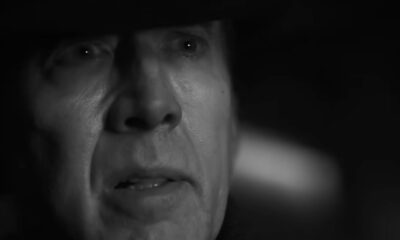
Shot entirely in beautifully luxuriant monochrome, The Man Who Wasn’t There is a distinctive and richly layered noir set in 1940s California. Billy Bob Thornton plays Ed Crane, a chain-smoking, no-mark barber with a snappy one-liner for every occasion (he is the omniscient narrator of this film) who decides to blackmail the lover of his wife Doris (McDormand, in good form here). Her lover happens to be her boss, the hulking and grotesquely sinister Big Dave Brewster (a marvelous turn from Gandolfini). But of course this is a noir tale with the usual schematics, so Crane’s plans turn to so much mush before his very eyes. His wife is accused of the murder of Big Dave – and to cap it all the man Crane foolishly chose to invest in, played by Coen Brothers mainstay Jon Polito, appears to have skipped town. Crane sees redemption in his unnatural interest in young girl Birdy Abundas (a young Scarlett Johansson) and this Lolitaesque relationship also seems doomed from the start.
There is an elegant subtlety and a simple beauty to The Man Who Wasn’t There, from its use of shadows and silhouettes to Billy Bob Thornton’s wonderfully understated performance. Cinematographer Deakins and production designer wizard Dennis Gassner are reunited here once again, perhaps at their most effective, creating the shadowy demi-monde that Crane and co inhabit. Everything on screen is there for a very deliberate reason. It is the eclecticism of their body of work that makes The Coen Brothers among the most important filmmakers of the late twentieth and early twenty-first century. They don’t just admire the work that has gone before them, when they are on top form, they also understand how to inhabit the same space and transcend their influences.
The Coens really did their homework here and The Man Who Wasn’t There can stand shoulder to shoulder with the best of the 1940s noirs like Crossfire, Double Indemnity and Out of The Past. It is not the best Coen Brothers film ever made but it does come a close second to their finest work. The Man Who Wasn’t There is a film that will make you think, with an exceptional cast that really connects with its audience.
JOEL MEADOWS
Coen Brothers Day One Part One
Coen Brothers Day One Part Two
Coen Brothers Day Six Part One
Coen Brothers Day Six Part Two














You must be logged in to post a comment Login