

Headlines
30 Years of Dark Horse: Randy Stradley

Not Such A Dark Horse
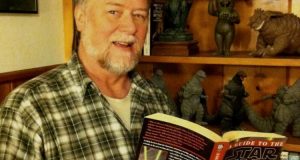
♦2016 marks the 30th anniversary of Portland’s Dark Horse Comics. As part of our celebration, we spoke to its Vice President of Publishing, Randy Stradley, who has been there since the start, to talk about how the company began, how it has evolved in three decades and more…
TW: When Dark Horse was set up back in 1986, it was a comic market dominated by Marvel and DC. What was the initial impetus to create Dark Horse?
RANDY STRADLEY: Mike Richardson always thinks big, so him wanting to start a publishing company was no surprise. Though dealing with the customers in his retail stores, it became apparent that a great many older comics readers (people in their late twenties and thirties) were still interested in comics as a storytelling medium, but that they were increasingly frustrated by the fact that many of the comics being published at that time were either aimed primarily at a younger audience, or were on tracks where major storylines were resurrected and repeated every few years. The guys who had been reading Marvel and DC for years were getting bored. Mike and I were in that age group then, and we understood those readers’ feelings. The impetus for starting Dark Horse was (and is) to publish comics that we would want to read ourselves.
TW: Mike Richardson had retail experience before setting Dark Horse up. It seemed to be a very bold move to shift from retail to publishing. What did Richardson have that made you feel confident that he could create and maintain a publishing company?
RS: We were lucky in that we didn’t really know what we were getting into. (laughs) Seriously, we felt we could find or write better stories than much of what was in the market and, as I mentioned above, we knew there were customers who were looking for new material. Part of it was the exuberance of youth, and part of it was my faith in Mike’s (and my own) determination to carve our own path.
TW: How did you get involved with Dark Horse?
RS: I met Mike when he opened a comics shop near where I was working at the time, and it soon became my regular place to buy comics. We got to know each other, and we kept in touch after Chris Warner and I moved back east to break into comics. A couple of years later (when I had moved to Los Angeles), Mike called me and said he was ready to start the publishing company he’d been talking about. He asked me if I wanted to be the editor, and the rest is history.
TW: How do you think Dark Horse has evolved and changed in its 30 year history?
RS:It’s difficult to see the changes when you’re inside the thing that’s changing, but for myself I know that I’ve gotten better at my job. I really feel that it takes almost a decade on the job before one develops a real understanding of editing — and writing — comics. A lot of people like to think that the comics medium is analogous to film, but it’s not at all. And trying to write or edit comics like they were film leads to, well, bad comics.
One of the biggest factors in any evolution that Dark Horse has experienced has been spurred by the many new people who have come into the company. As we grew, we needed more editors, designers, etc., and each new employee brought something new to the company. Dark Horse is clearly the sum of its parts.
TW: Prior to Dark Horse, comic companies were predominantly based in New York. How important do you think it was that Dark Horse was based out of Portland, Oregon?
RS: Well, at the point we got started, you had Pacific Comics, Eclipse, and Malibu in California, and First and Now in the mid-west. Fantagraphics was already in Seattle. So Portland didn’t seem like a stretch. This was about the time that Fed Ex was growing by leaps and bounds, and overnight delivery made your location almost irrelevant. The advent of email and the Internet has just made it easier to start a company wherever you want.
I tried to convince Mike to move the fledgling company to Hawaii, but he (having never been to Hawaii) insisted on staying in Oregon. Several years later, after he made his first trip to the islands, he said, “I should have listened to you.” Yeah, he should have.
TW: On a related question, do you think the fact that it wasn’t based in New York has given it a unique attitude and tone separate from the New York publishers like Marvel and DC?
RS: I think the fact that we had an unique attitude and tone made what what Marvel and DC were doing irrelevant to what we were doing. We knew we couldn’t compete with the Big Two, and we weren’t really interested in trying.
TW: Did you ever imagine that the company would be celebrating its 30th anniversary?
RS: Stop reminding me of how old I am.
When we started Dark Horse, we had big dreams. Mike and I would talk about where we wanted to be in five years, and in ten years, etc. Except by the middle of our second year we had surpassed our five-year goals, and by our fifth year we had blown past our ten-year goals. After that we just pursued whatever goal we wanted.
TW: It seems that Dark Horse has always managed to balance creator owned books like Hellboy and The Goon with licensed properties like Aliens and Predator. Do you think this is one of the reasons that it has continued to survive over thirty years?
RS: Well, nobody — certainly no comics reader — buys a comic based who owns the underlying property, so there has never been a real impetus to “balance” what we publish along ownership lines. The decisions that have been made all go back to our original idea of publishing the comics we’d want to read ourselves.
I’m not saying there haven’t been missteps along the way, but where we’ve always done best — where we’ve always been the most successful — is with those projects we’ve pursued because we believed in the story and/or the writers’ and artists’ ability to tell good stories.
TW: How has the comics industry changed since Dark Horse was set up back in 1986?
RS: This is a difficult question to answer succinctly because the industry and the market are constantly changing. But, in general, here’s what I’ve noticed: when Dark Horse began publishing (in 1986) there seemed to be a sizable number of comics readers who were interested in new characters, new creators, and in stories that pushed the boundaries that the industry had apparently set for itself. It was a great time to be reading comics. So many new and exciting projects by top creators — Watchmen, Elektra Assassin, Concrete, just to name a few.
By the early 1990s, the focus had moved from the story to the creator (often, in my opinion, regardless of whether the story was any good). This seemed to coincide with the explosive (and unwarranted) growth of the collectors’ market — and we all know how that ended.
Now the focus seems to have cycled back to specific popular characters. Where will it go next? Ha! If I knew that . . .
TW: And how has your role at Dark Horse changed over the past thirty years?
RS: My job responsibilities have meandered all over the board. Editing has always been primary, but there have been periods where I’ve also been involved in training, trying to set a publishing course, and even managing people. That last one is the most difficult, and the one that I am admittedly the least suited for. Fortunately, in Editorial, I now have a great partner in Editor-in-Chief Dave Marshall.
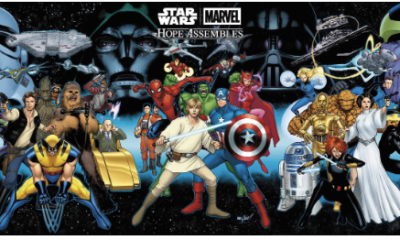
11) A question I have to ask (and it may be more appropriate for Mike Richardson). How detrimental do you think the loss of Star Wars to Marvel has been for Dark Horse?
RS: Obviously, we didn’t want to lose Star Wars, but looking at all of the changes that have taken place since Lucasfilm was sold to Disney, I’m not sure we’d be happy working on the property now.
We took a hit financially, but it wasn’t crippling, by any means. And, as I have mentioned several times, we got into this business to tell stories we’d want to read ourselves.
TW: You used to be well known as a writer but that seems to taken a back seat in recent years. Is writing something that you would like to return to at some point?
Wait. I was “well known” as a writer? Why didn’t somebody tell me?
Truth be told, until this year (2016) I was writing about the same number of comics each year that I always had been. This year has been a nice break from the freelance deadlines, but I’m about ready to put my writer’s cap back on. You should see it — it’s really fancy!









You must be logged in to post a comment Login